
 PDF Download
 PubReader
 Export Citation
 Email the Author
 Share Facebook
 Share Twitter
 Cited by 1 Article
 Metrics (View:2,925)







Introduction
Chronic pulmonary diseases (CPD), including chronic obstructive pulmonary disease (COPD), are recognized as major chronic conditions causing high global prevalence and substantial socioeconomic burden [1], while leading to severe functional limitations and disability that require clinical assessment [2]. CPD is characterized by persistent dyspnea, cough, and sputum production. As the disease advances, it is frequently accompanied by physical and psychological comorbidities such as systemic inflammation, skeletal muscle dysfunction, cardiovascular disease, malnutrition, and anxiety or depression. These complex issues limit physical activity and trigger acute exacerbations of COPD (AECOPD), driving significantly reduced quality of life and recurrent hospitalizations, thereby generating substantial socioeconomic costs [3].
Conventional management of CPD has primarily focused on pharmacotherapy to control airway inflammation and induce bronchodilation; however, this approach alone is insufficient to fully address the systemic effects and functional decline associated with the disease. Consequently, major international guidelines have expanded treatment goals from simple improvement of lung function to symptom relief, enhancement of exercise capacity, improvement of quality of life, and prevention of acute exacerbations, underscoring the role of pulmonary rehabilitation (PR) as a core non-pharmacological intervention [4].
PR is a comprehensive multidisciplinary program that includes exercise training, nutritional and psychosocial interventions, and disease education, necessitating patient-centered individualized management [5]. In particular, three key components decisively influence the success and sustainability of rehabilitation programs: self-management, effective patient education, and multidisciplinary care. Self-management offers clinical benefits by improving quality of life and reducing the risk of respiratory-related hospitalizations in COPD patients, while also decreasing healthcare utilization through prompt responses to acute exacerbations [6]. Patient education enhances treatment adherence by increasing disease understanding and self-efficacy, while a multidisciplinary approach leads to optimal treatment outcomes by integrally managing complex comorbidities and psychological barriers.
This review aims to contribute to the qualitative improvement of PR programs for CPD patients by examining the clinical evidence of self-management, strategic methods of patient education for behavioral change, and the role of multidisciplinary teams for comprehensive assessment. Ultimately, this review proposes an optimal CPD management strategy that integrates these three complementary elements.
Main Text
Self-management is a core concept that has fundamentally shifted the approach to managing CPD. It refers to the patient's capacity to manage symptoms, treatments, and physical and psychosocial impacts, representing an ongoing, active process in daily life in collaboration with healthcare providers [7,8]. Beyond simple knowledge acquisition, it focuses on developing key skills-such as problem-solving, decision-making, and resource utilization—to drive behavioral change.
The clinical importance of self-management stems from the nature of CPD. The disease requires lifelong management, and acute exacerbations serve as primary drivers of disease progression. A patient’s self-management competency is critical for recognizing risks and initiating early responses without immediate medical intervention. A systematic review confirmed that self-management interventions significantly improve quality of life (QoL) in COPD patients and help reduce the risk of respiratory-related hospitalizations, a key clinical outcome [6]. Therefore, self-management offers dual benefits of improving QoL and reducing healthcare costs, making it an essential component for the sustainability of modern PR programs.
Early recognition and rapid response to AECOPD are the most practical aspects of self-management, implemented through personalized action plans. An action plan is a written strategy instructing patients on how to monitor symptom changes and when to adjust medications or seek medical care [9]. Using a symptom-based multi-stage approach, these plans guide patients to recognize early signs of exacerbation and promptly initiate self-care [10].
The clinical effectiveness of action plans has been proven by a Cochrane systematic review. They effectively reduce respiratory-related emergency visits and hospitalizations, especially when combined with telephone follow-up [9]. Furthermore, action plans facilitate the appropriate use of rescue medications, such as steroids and antibiotics, enabling patients to start early treatment without direct medical intervention. Ultimately, this early intervention reduces exacerbation severity, shortens recovery time, and fosters self-efficacy-the confidence to control one's condition [9,10].
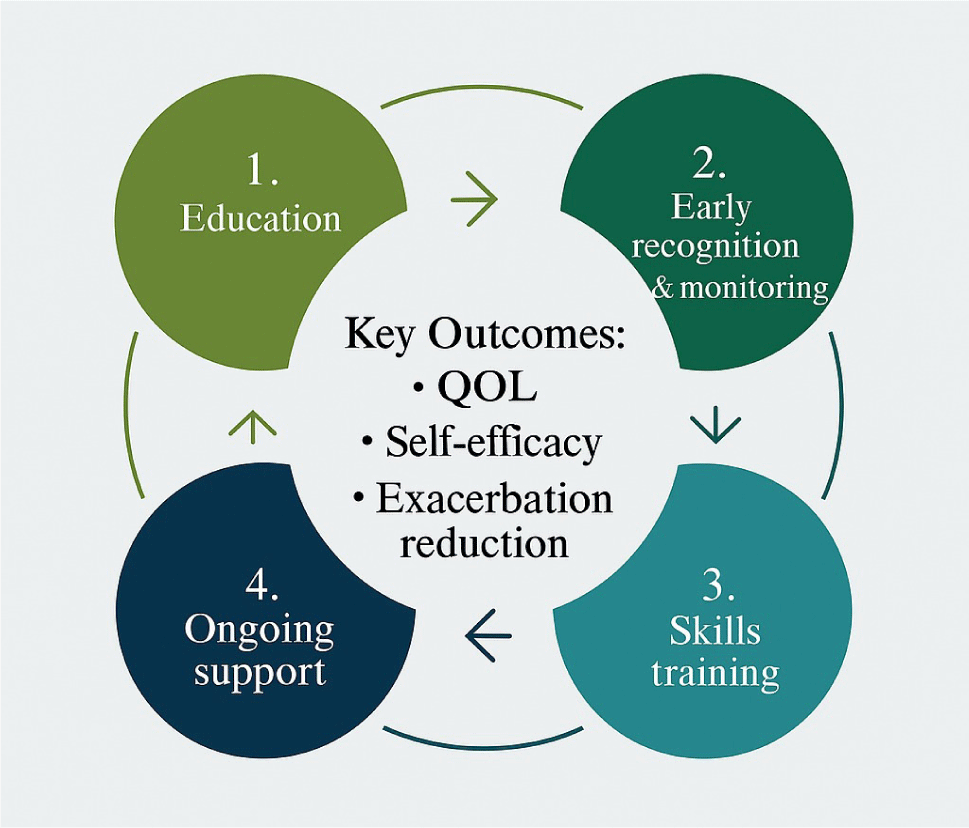
Effective self-management programs yield the best results when implemented as multicomponent interventions where elements complement each other [11,12]. According to prior research and international guidelines, self-management for CPD comprises four domains: structured education, symptom monitoring and early recognition of exacerbations using digital tools, practical skills training, and ongoing support for long-term behavior maintenance. These elements enhance self-efficacy, enable early response to exacerbations, and consequently improve QoL. This review summarizes these four key components in Table 1 and Fig. 1.
| Core component | Key references | Brief description |
|---|---|---|
| Education | [8, 13–16] | Provides structured knowledge on disease mechanisms, medication and inhaler use, triggers, and vaccinations to improve treatment adherence and self-efficacy. |
| Early recognition & monitoring | [13, 14, 16] | Encourages daily observation and recording of symptoms/sputum changes, early identification of exacerbation signs, and timely execution of the individualized action plan. |
| Skills training | [8, 15, 17] | Teaches practical techniques including breathing, coughing/sputum management, energy conservation, and problem-solving/decision-making to strengthen daily self-management capabilities. |
| Ongoing support | [13, 14, 16] | Utilizes scheduled follow-up (telephone, outpatient, or digital platforms) to maintain behavior change, provide reinforcement, and support long-term continuity. |
Patient education is defined not merely as information delivery but as a structured learning process designed to induce behavioral change [5,13]. The Global Initiative for Chronic Obstructive Lung Disease (GOLD) 2023, American Thoracic Society (ATS) 2023 guidelines clearly identify patient education and self-management as essential elements of PR, aimed at improving disease understanding, ensuring appropriate responses to symptoms, and promoting treatment participation [4,14]. The scope of education encompasses multidimensional elements, including pathophysiology, medication use, exacerbation prevention, exercise strategies, and nutritional management [6,12]. In COPD, inhaler technique, early recognition of exacerbations, and energy conservation are central. For patients with low health literacy, literacy-sensitive strategies such as audiovisual materials and the "teach-back" method are required [15]. Ideally, educational content should be personalized according to the patient's disease stage, motivation, and preferences [14,16].
Effective patient education maximizes clinical outcomes when designed based on behavior change theory [14]. Based on social cognitive theory emphasizing self-efficacy and behavioral reinforcement, COPD self-management interventions have been shown to reduce hospital utilization and improve outcomes [16].
In clinical practice, the "teach-back" technique is strongly recommended. Given the prevalence of low health literacy in older adults with cardiopulmonary disease, asking patients to repeat instructions in their own words is the most practical method to verify understanding and correct misconceptions. Additionally, iterative correction of inhaler technique, problem-solving training, and peer support should be integrated [6,12]. Recent studies also report that digital education and mobile app-based monitoring positively impact maintaining behavioral changes [17,18].
Self-efficacy is a core factor determining self-management behavior in CPD patients and is a central goal of education [12,16]. Defined as the belief in one's ability to "cope with symptoms" or "sustain exercise," self-efficacy is closely linked to PR adherence [13]. Enhancing self-efficacy is achieved through mastery experience, vicarious experience, supportive feedback, and physiological regulation of dyspnea [16]. For instance, experiencing immediate dyspnea reduction after breathing techniques or receiving positive feedback on inhaler use strengthens self-efficacy [6]. A meta-analysis confirmed that education-based self-management programs improve self-efficacy, emotional well-being, and disease knowledge [12].
PR programs consist of complementary contributions from various experts. Physicians oversee diagnosis, medication, and safety; physical therapists lead exercise and respiratory training; nurses handle inhaler education and symptom monitoring; and dietitians address nutritional issues like sarcopenia. Psychologists address emotional factors such as anxiety and depression, while social workers support daily living needs. Recent studies consistently indicate that multidisciplinary team-based rehabilitation yields greater improvements in clinical indicators such as 6-minute walk distance (6MWD), COPD Assessment Test (CAT)/St. George’s Respiratory Questionnaire (SGRQ) scores, and readmission risk compared to single-discipline approaches [14,19].
Initial comprehensive assessment is crucial for designing individualized interventions. GOLD 2023 and ATS 2023 guidelines propose common essential elements: exercise capacity, QoL, mental health, inhaler use, nutrition/body composition, and comorbidities [4,14]. Exercise capacity is typically assessed using the 6-minute walk test (6MWT), cardiopulmonary exercise testing (CPET), and Short Physical Performance Battery (SPPB). Frailty affects 19–63% of COPD patients and is an independent prognostic factor for mortality and functional decline [20]. Sarcopenia is found in 21-40% of patients; resistance training combined with protein supplementation is the most effective strategy [21]. Accordingly, ATS 2023 recommends screening for frailty and sarcopenia to guide progressive exercise prescriptions [14].
Respiratory symptoms and QoL are assessed using CAT, SGRQ, and modified Medical Research Council (mMRC) dyspnea scale, serving as key patient-reported outcome (PRO) measures. The Pulmonary Rehabilitation Core Outcome Set (COS-PR) established international consensus on essential outcomes: exercise capacity, limb muscle function, physical activity experience, and health-related quality of life (HRQoL) [22]. Mental health assessment is also essential. A 2025 meta-analysis confirmed that depression and anxiety significantly negatively impact COPD prognosis [23]. Consequently, multidimensional strategies integrating cognitive behavioral therapy (CBT) are recommended [14]. Inhaler errors occur in 60–80% of patients and are linked to exacerbations [24]. Repeated assessment using the teach-back approach is the most effective correction strategy [25]. Additionally, management of polypharmacy is crucial to prevent adverse drug events in older adults [26]. Nutritional status is assessed via BMI and fat-free mass index (FFMI). Low BMI and reduced FFMI are risk factors for poor prognosis [4]. These assessments directly shape personalized PR strategies, which have shown superior results in adherence and long-term effectiveness compared to traditional models [14,22].
The majority of CPD patients have multimorbidity, impacting mortality and QoL [27,28]. Common comorbidities include cardiovascular diseases (heart failure, coronary artery disease), metabolic diseases, musculoskeletal problems, and mental health disorders [20,21,23,27,28]. In particular, dyspnea in CPD patients may coexist with cardiac issues such as heart failure; thus, differential diagnosis and concurrent management are essential. Therefore, the multidisciplinary team must systematically assess cardiovascular risk and medication use. An integrated care pathway involving cardiology and other specialties shows greater effects in reducing hospitalizations than PR alone [19,27]. Table 2 summarizes common comorbidity clusters and integrated management strategies.
| Comorbidity cluster / condition | Major impact | Integrated management strategy | References |
|---|---|---|---|
| Cardiovascular diseases (CAD, HF, PH) | Increased mortality, reduced exercise capacity, higher exacerbation risk | Cardiovascular risk assessment, medication optimization, referral to cardiology | [27, 28] |
| Metabolic diseases (diabetes, obesity) | Increased systemic inflammation, higher exacerbation frequency | Glycemic and weight management, nutritional counseling, structured physical activity programs | [27] |
| Musculoskeletal problems (frailty, sarcopenia) | Functional decline, increased fall risk | Resistance/strength training, protein supplementation, fall-prevention strategies, pain management | [20, 21, 31] |
| Mental health disorders (anxiety, depression) | PR dropout, reduced physical activity | CBT, breathing-based relaxation, peer-support interventions | [23] |
| Polypharmacy | Higher adverse events, poorer adherence | Medication review, deprescribing strategies, pharmacist collaboration | [26] |
Future CPD management is expected to evolve through digital-based models and personalized PR. Telehealth has demonstrated clinical potential in remote monitoring and improving adherence, contributing to reduced readmission risks [18,29]. Telerehabilitation is gaining attention as an essential alternative to overcome physical constraints, providing uninterrupted services to end-stage patients or those with limited access. Furthermore, personalized PR, reflecting the patient's frailty profile and behavioral characteristics, is becoming a standard strategy. Shifting from uniform programs to context-based prescriptions has been validated in recent clinical studies [30,31]. Additionally, adopting the COS-PR will ensure consistency in outcome measures, enhancing quality control [22]. In conclusion, the evolution toward digital and personalized approaches serves as a foundation for a sustainable, patient-centered management system.
Conclusion
The management of CPD is limited by pharmacotherapy alone due to disease complexity and high comorbidity burden. As discussed, strengthening self-management, implementing behavioral science-based education, and adopting a multidisciplinary approach are core components of PR that substantially support functional recovery and exacerbation reduction. In particular, structured education enhances self-efficacy, while personalized interventions based on comprehensive assessment are essential for diverse patient populations. Future strategies must integrate telerehabilitation and personalized PR reflecting frailty and sarcopenia profiles to ensure sustainability. Given the high prevalence of older adults and multimorbid patients in CPD, this integrated approach is a strategic necessity. Ultimately, the modern rehabilitation model anchored by the triad of Self-management, Education, and Multidisciplinary Care will provide a pivotal foundation for improving long-term health outcomes.


